
What "bed to bed" means
The flight is one part of the journey. Bed to bed means our medical crew collects the patient from the hospital bedside, stays with them through the flight, and hands them over at the receiving hospital.
The six stages of a mission
- You call usOur 24/7 operations centre takes the patient's location, condition and destination.
- Medical assessmentOur flight physician reviews the records with the treating hospital, assesses fitness to fly and confirms the medical plan.
- Mission planningOur operations team files flight plans, secures overflight and landing permits, and handles immigration and customs for the patient.
- Bedside collectionA ground ambulance is arranged at both ends. Our crew collects the patient from the hospital bedside.
- The flightA flight physician and ICU-trained nurse provide continuous ICU-level care.
- HandoverOur crew hands the patient over at the bedside of the receiving hospital.
At the hospital

Before the patient moves, our flight physician liaises with the treating hospital to review the medical records and imaging.
We also coordinate admission, bed availability and specialist consultations with the receiving hospital before the patient arrives.
In the air
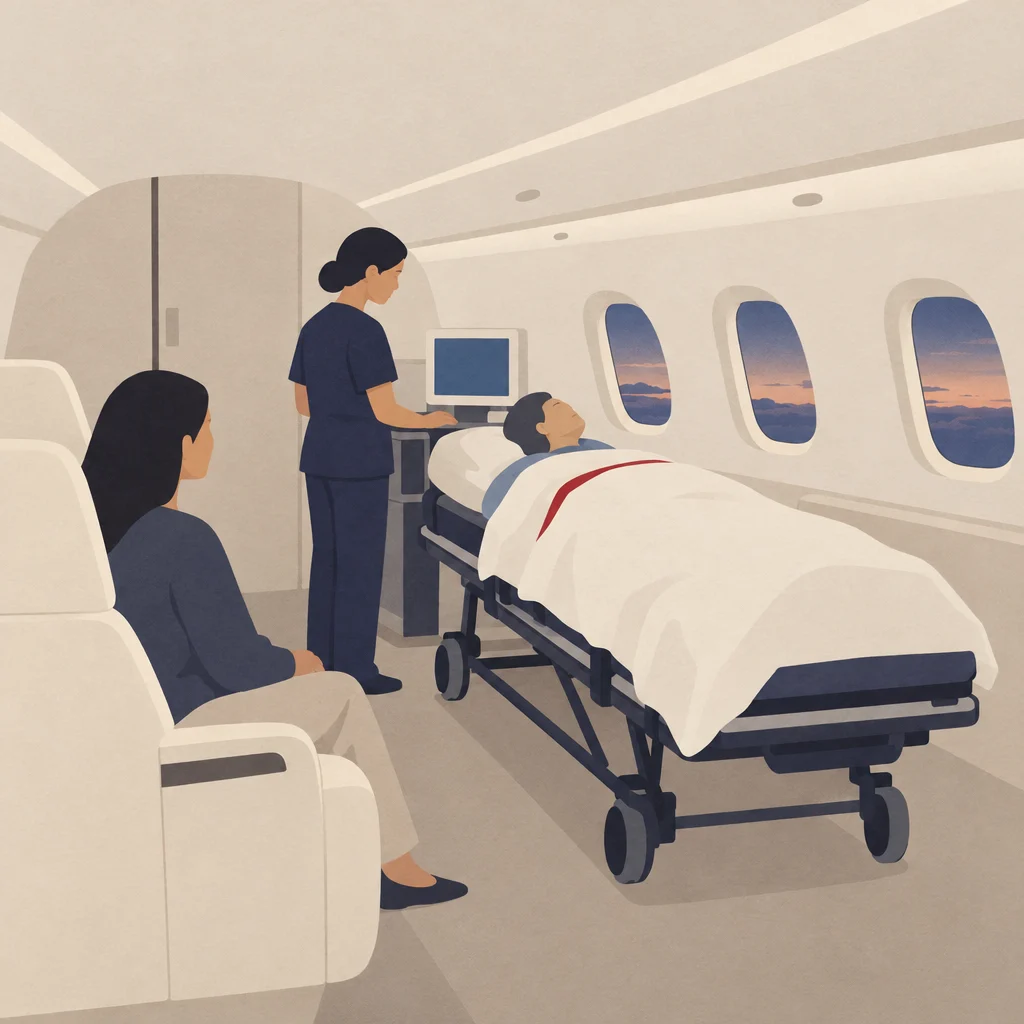
The cabin is pressurised and climate-controlled. Each jet is equipped as a flying ICU, with the same medical equipment baseline.
- Zoll X Series monitor and defibrillator
- Transport ventilator and infusion pumps
- Mindray patient monitor and suction
- Medical oxygen and a Spectrum Aeromed stretcher
Family can often travel too. Our Learjet 60SE seats up to 2 companions and the Hawker 800XP seats up to 3, and every companion must be medically fit to fly.
How long the flights take
These are typical block times to or from Singapore, in still-air conditions. Actual times vary with weather, routing and permits.
Who is in charge throughout
Our flight physicians, ICU nurses, pilots and operations team work as one team, so one team is responsible for the whole mission.