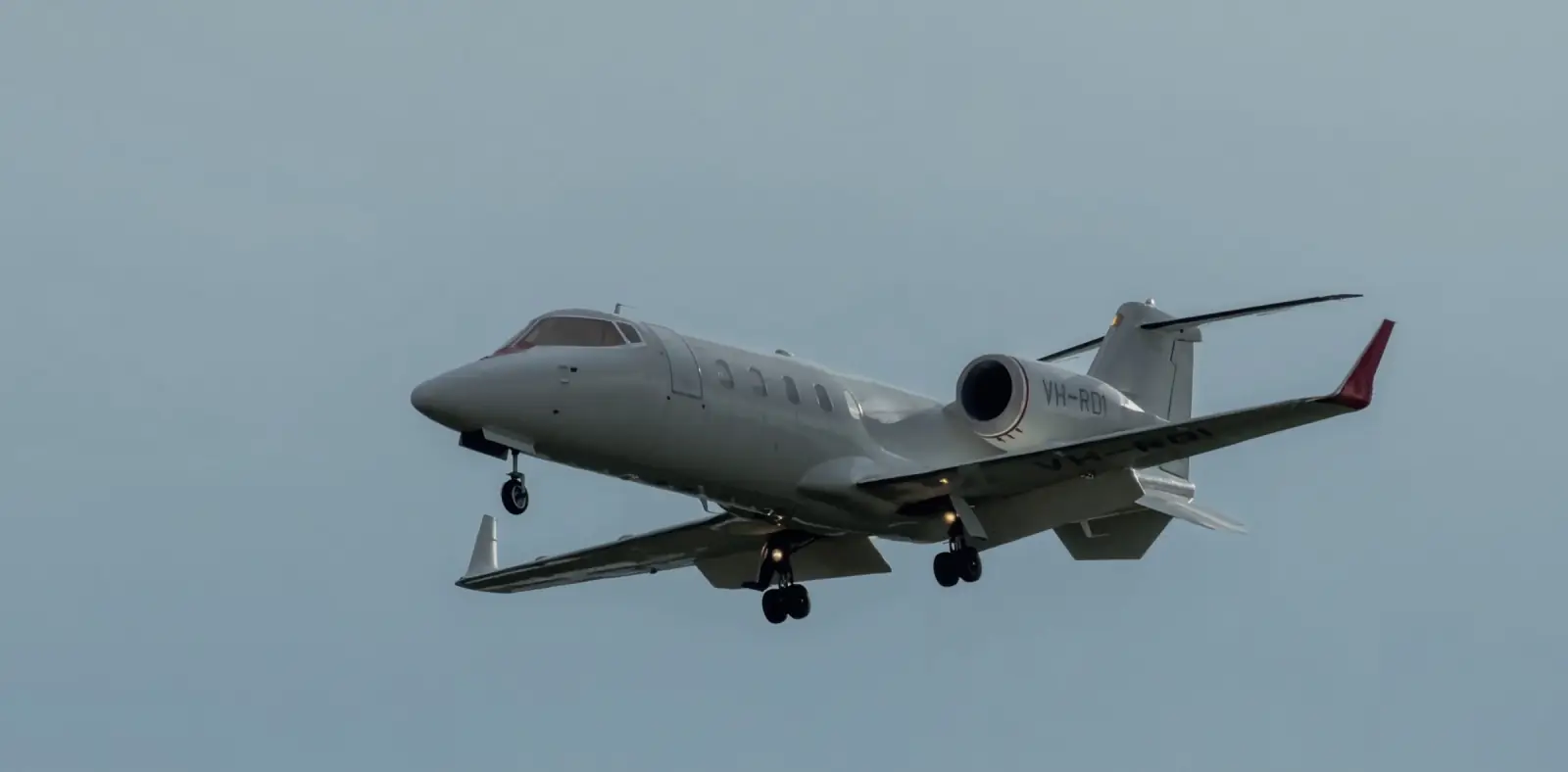
Red Dot Air Ambulance operates EURAMI-accredited air ambulance services from Seletar Airport, Singapore. Our fleet of four dedicated medical jets, including a Bombardier Learjet 60SE and a Raytheon Hawker 800XP, is configured as a set of flying ICUs with a flight physician and ICU-trained nurse on every mission.
Typical mobilisation time is 2 to 6 hours for Asia-Pacific missions. We are a direct operator, not a broker, and we own every aircraft we fly.
What Is an Air Ambulance?
An air ambulance is a dedicated fixed-wing aircraft that has been converted into a flying intensive care unit.
Unlike a regular charter flight or a commercial airline, an air ambulance carries specialised medical equipment and a full critical-care team, typically a flight physician and an ICU-trained nurse, who monitor and treat the patient throughout the entire flight.
Air ambulances are used when a patient needs to be moved between cities or countries but is too ill or injured to travel on a commercial flight. The aircraft cabin is pressurised and climate-controlled to protect patients with conditions sensitive to altitude changes, such as traumatic brain injuries, respiratory failure, or recent surgery.
It is important to understand the difference between an air ambulance and a helicopter ambulance (HEMS). Helicopter services operate over short distances, typically within a single city or region, for emergency scene responses. A fixed-wing air ambulance like ours covers long distances across countries and continents, providing sustained ICU-level care for hours at a time.
A commercial medical escort is another option, where a doctor accompanies a patient on a scheduled airline. However, this is only suitable for patients who are medically stable enough to sit or recline in a business-class seat. For patients requiring a stretcher, ventilator, or continuous monitoring, a dedicated air ambulance is the only safe option.
How Our Air Ambulance Service Works
From your first call to patient handover at the destination hospital, here is what happens at every step.
You Call Us
Our 24/7 operations centre answers immediately. You speak directly to the team that will plan and fly the mission. We gather the patient's location, medical condition, and destination. No call centres. No brokers.
Medical Assessment
Our flight physician reviews the patient's medical records with the treating hospital. We assess fitness to fly, determine the required equipment and crew configuration, and confirm the medical plan for transport.
Mission Planning
Our operations team files flight plans, secures overflight and landing permits, arranges ground ambulances at both ends, coordinates with the receiving hospital, and handles immigration and customs for the patient.
Patient Transfer
Our medical crew collects the patient from the hospital bedside, transfers them to the aircraft, provides continuous ICU-level care throughout the flight, and hands them over to the receiving hospital. Bed-to-bed, with no gaps in care.
What Medical Equipment Is Onboard Our Air Ambulance?
Every aircraft in our fleet is configured as a flying intensive care unit. The equipment onboard matches what you would find in a hospital ICU, certified for use at altitude.
Zoll X Series Monitor/Defibrillator
Hospital-grade cardiac monitor and defibrillator. Provides continuous 12-lead ECG monitoring, defibrillation, cardioversion, and external pacing. The same unit used in top hospital emergency departments worldwide.
Mechanical Ventilator
Transport ventilator capable of supporting patients who cannot breathe independently. Provides volume-controlled and pressure-controlled ventilation modes with adjustable settings for a range of respiratory conditions.
Infusion Pumps
Multiple syringe drivers and infusion pumps for precise, continuous delivery of medications. Essential for maintaining sedation, vasopressors, pain management, and intravenous fluids during flight.
Mindray Patient Monitor
Continuous multi-parameter monitoring including ECG, SpO2, blood pressure (invasive and non-invasive), capnography (EtCO2), and temperature. Gives the medical team real-time visibility of every vital sign throughout the flight.
Suction and Oxygen Systems
Onboard medical oxygen supply with flow regulators and high-flow capability. Portable suction units for airway management. Backup oxygen cylinders ensure uninterrupted supply for missions of any duration.
Spectrum Aeromed Stretcher System
Aviation-certified stretcher system that locks securely into the aircraft floor rails. Designed to hold a full-size adult patient with all monitoring equipment and IV lines accessible to the medical crew at all times during flight.
All medical equipment is aviation-certified, regularly calibrated, and inspected before every mission. Additional specialist equipment is available on request for neonatal, bariatric, or infectious disease cases.
Which Aircraft Will Fly Your Mission?
We own all four jets outright, and every mission flies on one of them. The jet assigned to your mission depends on distance, patient acuity, and how many companions are travelling.
Short to mid-range missions across Southeast Asia are typically flown on a Bombardier Learjet 60 family aircraft. Longer flights to Australia, Japan, India, or onward connections to Europe and the Middle East are flown on our larger jet, configured for dual-stretcher and three-companion capacity.
Every aircraft is configured as a flying ICU with the same medical equipment baseline; the choice is about range and seating, not standard of care.
Specifications, sample flight times, and registration details for each jet live on our dedicated fleet page.
View the Full Fleet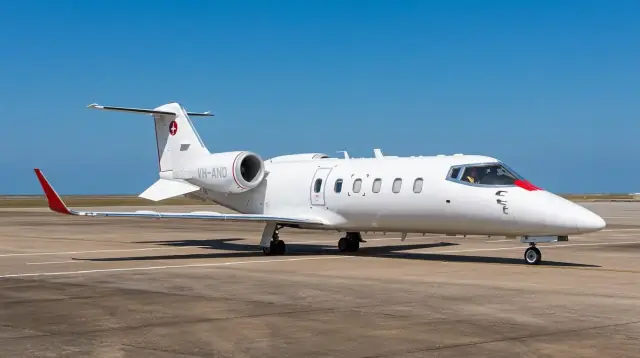
Who Uses Our Air Ambulance?
Our clients include families, insurers, hospitals, and corporate assistance providers across the Asia-Pacific region.
Families
When a loved one is hospitalised overseas and needs to come home, families call us directly. We handle everything from medical assessment to hospital-to-hospital transfer so you can focus on being there for your family.
Insurance Companies
Travel and health insurers appoint us as their direct air ambulance provider for policyholders in the region. We offer transparent pricing, detailed medical reports, and direct communication with claims teams throughout the mission.
Hospitals
Hospitals across Asia-Pacific refer patients to us when they need to transfer critical cases to specialised facilities. Our flight physician coordinates directly with the treating and receiving medical teams to ensure continuity of care.
Corporates and Assistance Providers
Multinational companies and global assistance firms rely on us for employee medical evacuations. We provide retainer agreements, 24/7 availability, and guaranteed response times for organisations with staff across the region.
Air Ambulance Questions Answered
We answer the questions families and insurers ask most often about air ambulance services from Singapore.
Every aircraft is configured as a flying ICU.
The standard loadout includes the Zoll X Series cardiac monitor and defibrillator, a transport ventilator capable of invasive and non-invasive support, multiple syringe and volumetric infusion pumps, a Mindray multi-parameter patient monitor (ECG, SpO2, blood pressure, capnography, temperature), portable suction, onboard medical oxygen with backup cylinders, and a Spectrum Aeromed certified aeromedical stretcher.
All equipment is aviation-certified, regularly calibrated, and inspected before every mission. See the equipment section above for full details.
Yes. Our transport ventilator handles both invasive (intubated) and non-invasive ventilation modes, with adjustable settings for patients across the respiratory acuity range. Our flight physician and ICU nurse manage ventilation continuously throughout the flight, with monitoring tied to the same cardiac and respiratory parameters used in a hospital ICU.
We routinely transport patients post-surgery, with respiratory failure, traumatic brain injuries, and other ventilation-dependent conditions.
A fixed-wing air ambulance like ours covers long distances across countries and continents. The aircraft cabin is pressurised and climate-controlled, which protects patients with conditions sensitive to altitude changes such as traumatic brain injuries, respiratory failure, or recent surgery.
Helicopter (HEMS) services operate over short distances within a single city or region, typically for emergency scene responses, and do not have pressurised cabins. The two modes complement each other; for international transfers and long-duration critical care, fixed-wing is the only safe option.
Our medical director and operations team select the aircraft together, based on three factors: distance to be flown, the patient's clinical acuity, and the number of companions travelling. Short to mid-range regional missions typically use a Bombardier Learjet 60 family aircraft. Longer flights or dual-stretcher cases use the larger jet.
Every aircraft in our fleet carries the same ICU equipment baseline, so the choice is about range and seating capacity, not standard of care. See the full fleet.
For general questions about cost, mobilisation timing, insurance, family travel, and what to have ready when you call, see our main FAQ page.
Your Loved One Needs to Move.
We Are Ready.
Our medical operations team is standing by to assess the case, plan the mission, and get moving. No obligation. No delay.
+65 9152 0777Or email sales@seletarjet.com · Second line: +65 8799 8186